How We Learn · The Innovation Advantage™ · The CAPE Method™
When answers are everywhere, knowing how to think matters more than ever.
Finding an answer gets easier every year. Knowing which question to ask, what to trust, how to work with other people, and what to do when the first idea fails — that is getting harder, and more valuable. So we teach children what to do when they don't know.
Developed in Innovation Advantage classrooms — tested before it reaches any other school.
Start from what is already there
Children are natural innovators.
Watch a young child meet something new. They touch it. Turn it over. Ask a question. Try something. Watch what happens. Then try again.
Long before anyone says the words critical thinking, they are already doing it. Our job isn't to manufacture curiosity — it's to protect it, and teach children how to use it.
The move that changes everything
From "tell me" to "let me think."
When something doesn't work here, a teacher doesn't rush in with the answer. She asks one of five questions — and then she waits. The waiting is the hard part.
- What do you notice?
- What do you think happened?
- What could you try?
- Is there another way?
- What did you learn?
The teacher is still right there — observing, guiding, offering materials. But the thinking belongs to the child. Over a year, children start looking less quickly at the adult and more confidently at the problem.
Meet the CAPE Method™
A simple way to figure things out.
Four steps that take a child from a question to an idea, and from an idea to something real. Then it starts again.
Challenge
“What are we trying to figure out?”
Every investigation starts with a real problem worth solving — not a topic on a page, but a genuine question the children care about. Learning begins with a meaningful question, need, or opportunity.
In the classroom: The teacher spots the problem before the children do — then sets the scene so they discover it themselves.
Analyze
“What do we already know, and what do we need to find out?”
Children observe, predict, research, and compare. They look closely, ask questions, gather information, and talk through what might work before they build anything.
In the classroom: The teacher supplies vocabulary, materials, and experiences — but the thinking belongs to the child.
Produce
“What can we make or do about it?”
Ideas become something real: a sketch, a structure, a sign, a plan, a presentation. Children build with their hands toward an outcome they chose themselves.
In the classroom: The teacher models skills, offers tools, and knows when a child needs support — and when to wait a little longer.
Evaluate
“Did it work? What did we learn?”
Children test their work, examine what happened, and figure out what to do differently. Then the cycle starts again — a mistake isn't the end of the learning; it's usually where the interesting part starts.
In the classroom: The teacher helps children examine a failure instead of correcting it — so resilience is practiced, not preached.
The content changes constantly — birds, bridges, water, shadows, shops. The cycle never does. The goal was never to memorize four letters; it's for the thinking behind them to become a habit that still works in third grade, and in a first job.
Same cycle, four minutes to six weeks
CAPE grows with your child.
Two-Year-Olds
A tower falls. “How could we make it stand?”
Children try different ways to rebuild it. The whole cycle takes four minutes — and nobody gave them the answer.
Preschool · Age 3
Will every object roll down the ramp?
They predict, test, compare, and argue about what they found. The investigation runs three or four days.
Pre-K · Age 4
How do we get birds to come to our garden?
Observe, research, sketch, build the feeder, test it, redesign it. Three weeks — and the squirrels were not in the plan.
Kindergarten & Up
Identify it, research it, test it, report it.
Six weeks, in teams, ending in a written recommendation that someone actually acts on.
Learning through projects
Children learn differently when there's a reason to know something.
Take a garden. Children measure the space, count seeds, research what plants need, watch insects, draw plans, record growth, read books, make signs, solve it when something doesn't grow, and explain what they learned.
Math is in there. Science is in there. Literacy, art, collaboration, and problem-solving are all in there. To the child, they are not doing seven subjects — they're figuring out how to grow a garden.
- Measure the space
- Count the seeds
- Research what plants need
- Observe the insects
- Draw the plans
- Record the growth
- Read the books
- Make the signs
- Solve it when nothing grows
- Explain what they learned
The habit parents tell us about later
Mistakes are information.
We want children comfortable with something most adults are not: not getting it right the first time. When something fails here, the teacher helps examine what happened instead of correcting it.
A mistake isn't the end of the learning. It's usually where the interesting part starts.
Learning is social
Innovation rarely happens alone.
Children need chances to explain an idea, listen to someone else's, disagree, negotiate, divide the work, give feedback, help a friend, and build something together. That builds communication and social-emotional skill — and teaches one lesson that's hard to teach any other way:
Someone else's idea can make your idea better.
What the adults are doing
This is not standing back and hoping.
Our teachers' role is highly intentional. Discovery learning without a skilled adult is just a mess with good lighting.
The outcomes
Six things your child builds.
Not aspirations printed on a wall. Each one is developed by a specific move inside the cycle, and your child's teacher watches for it while it's happening.
They learn to think it through
Reasoning and problem-solving, practiced on real problems instead of worksheets.
They learn to ask good questions
Curiosity treated as a skill to develop, not a phase to manage until it passes.
They learn to solve things that matter
Challenges that exist outside the classroom, not only inside the lesson plan.
They learn to make with purpose
Building with their hands, toward an outcome they chose themselves.
They learn to work with other people
Teamwork, communication, and noticing what somebody else needs.
They learn to try things that don't work
Resilience comes from failing at something small, on purpose, with a teacher nearby — hundreds of times before kindergarten.
The reassurance you're allowed to ask for
Thinking skills don't replace academics.
Language, literacy, math, science, social-emotional and physical development — all of it, at every stage. The difference is that here, those skills have a reason to be used.
They count
because the project requires counting.
They measure
because something needs to fit.
They write
because an idea needs to be documented.
They read
because information can help solve the problem.
Foundational skills become tools children learn to use — not tasks to complete.
It is not academic pushdown.
Four-year-olds are not doing first grade early. They are doing four-year-old work, taken seriously.
It is not a technology program.
Children use their hands. Screens are not the point — thinking is.
It is not enrichment layered on a regular day.
It is how the day is taught, in every classroom, all year. There is no separate innovation hour.
Inside our school
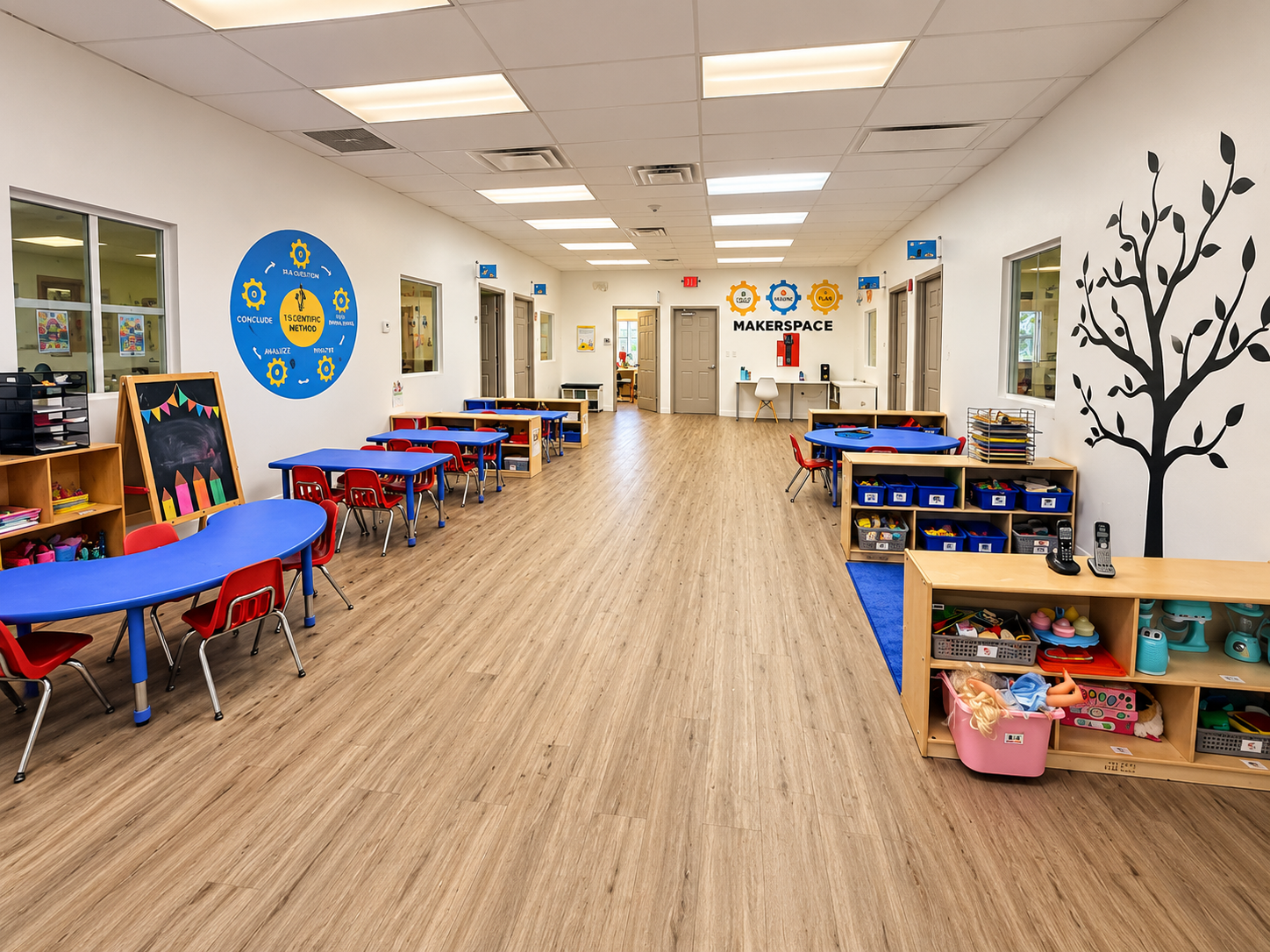
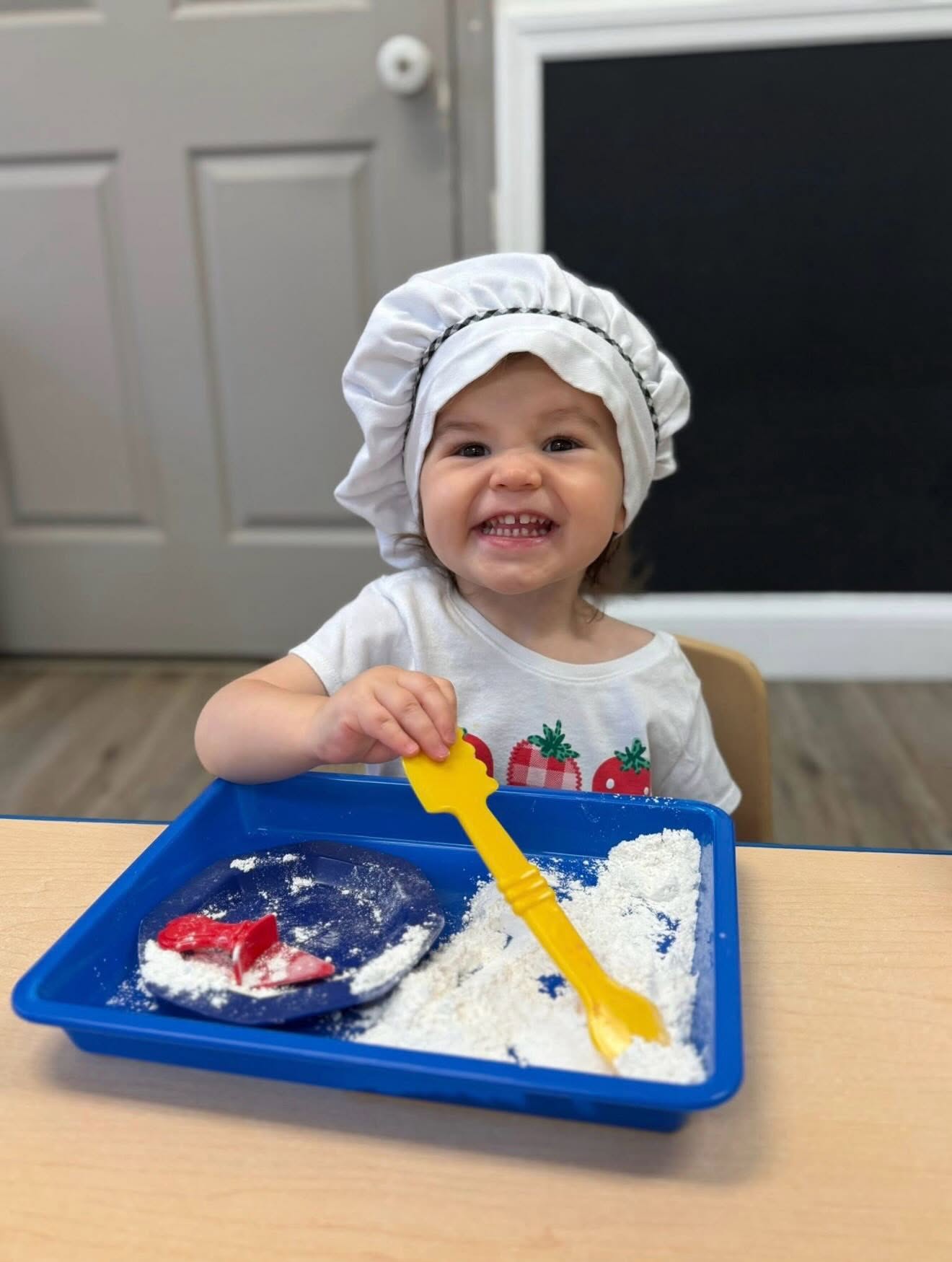
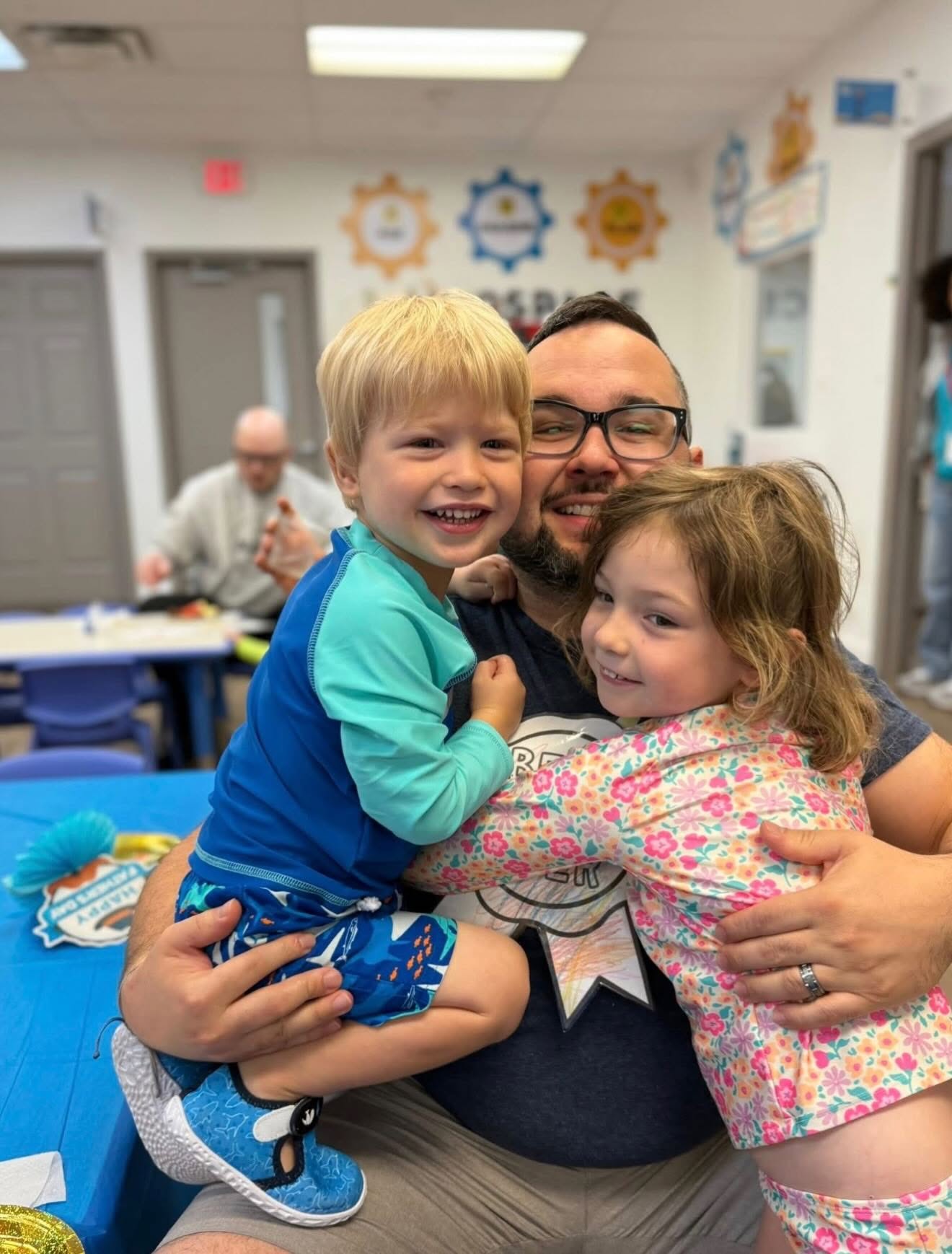
Life at Ebenezer Academy.
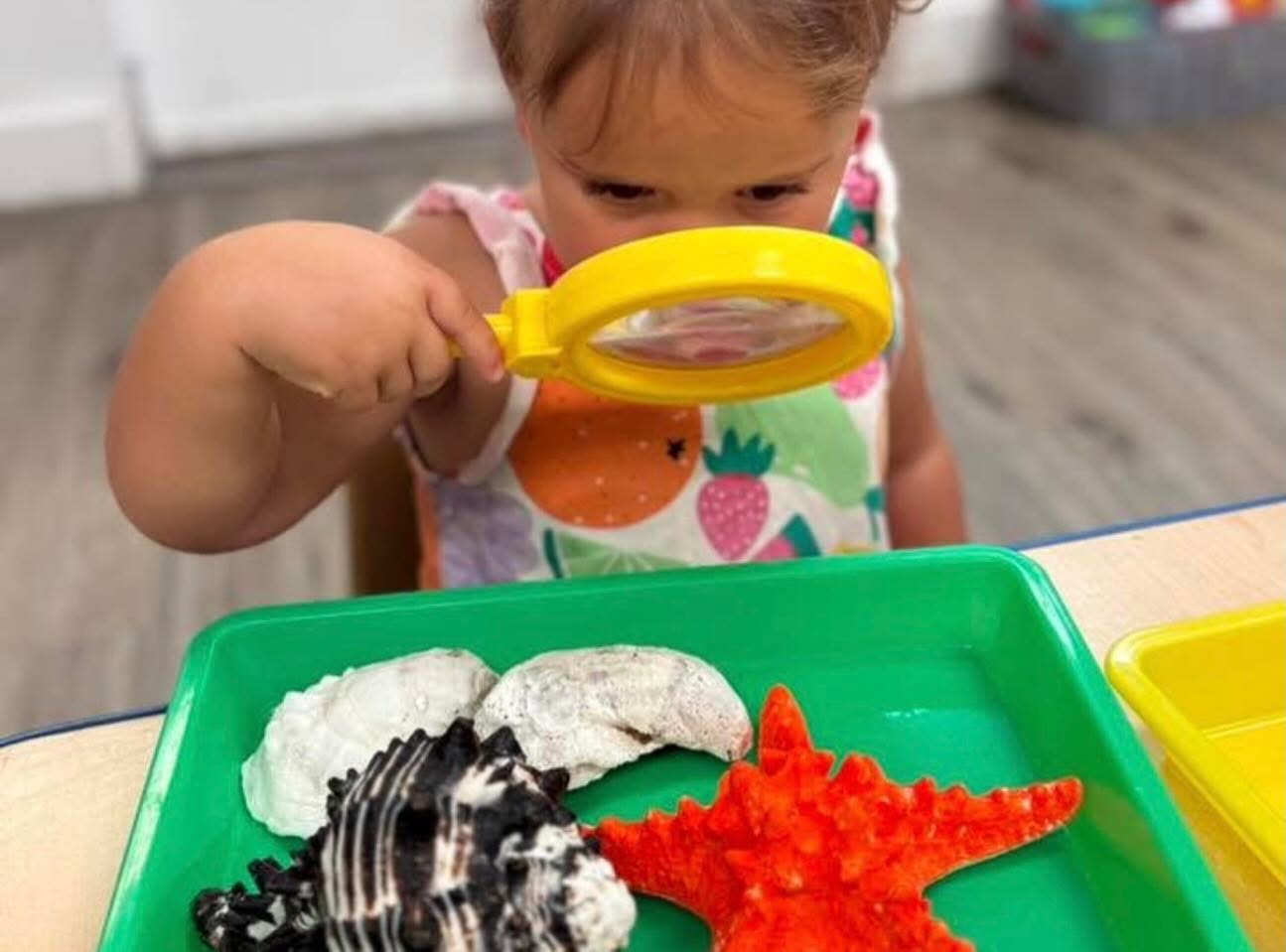
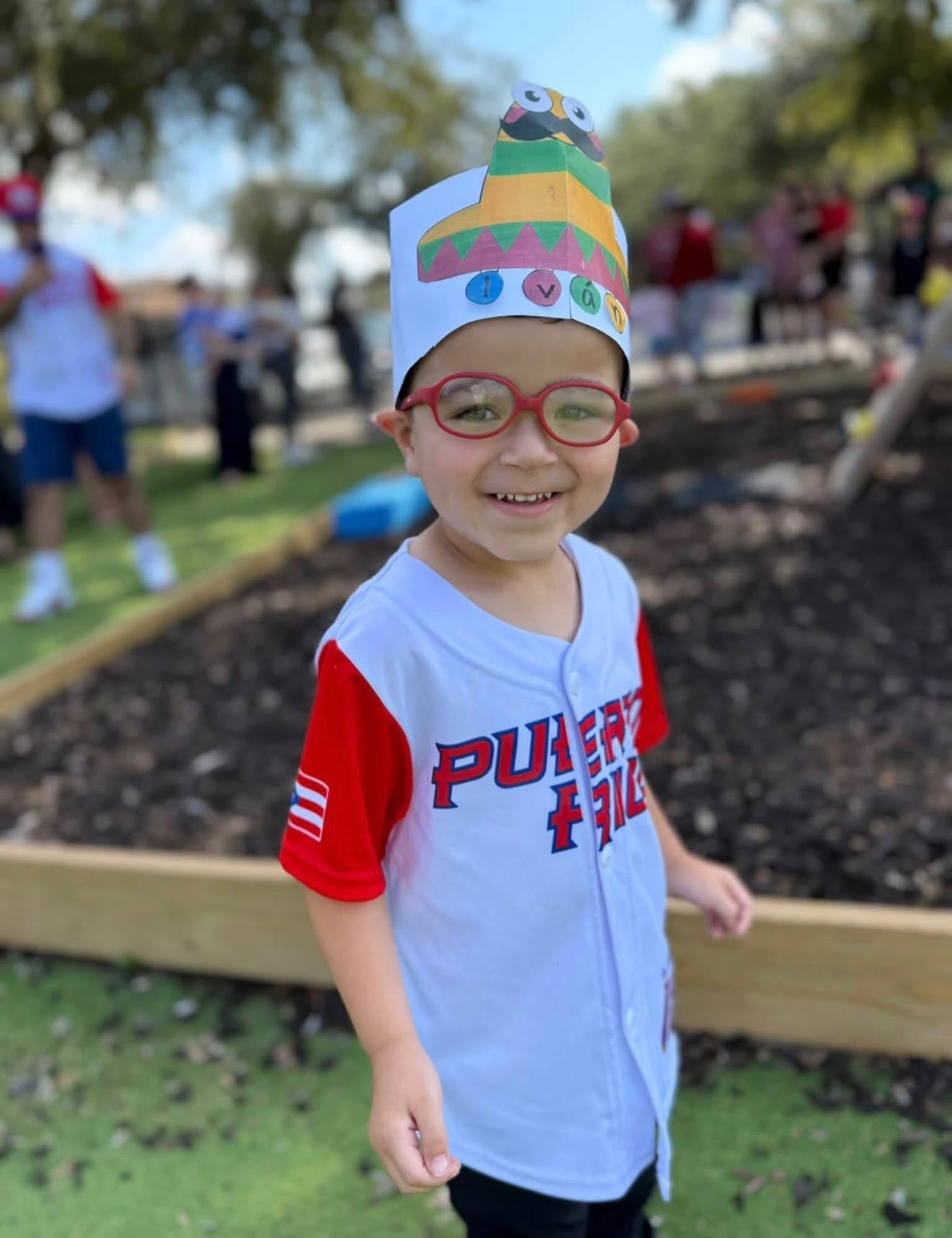
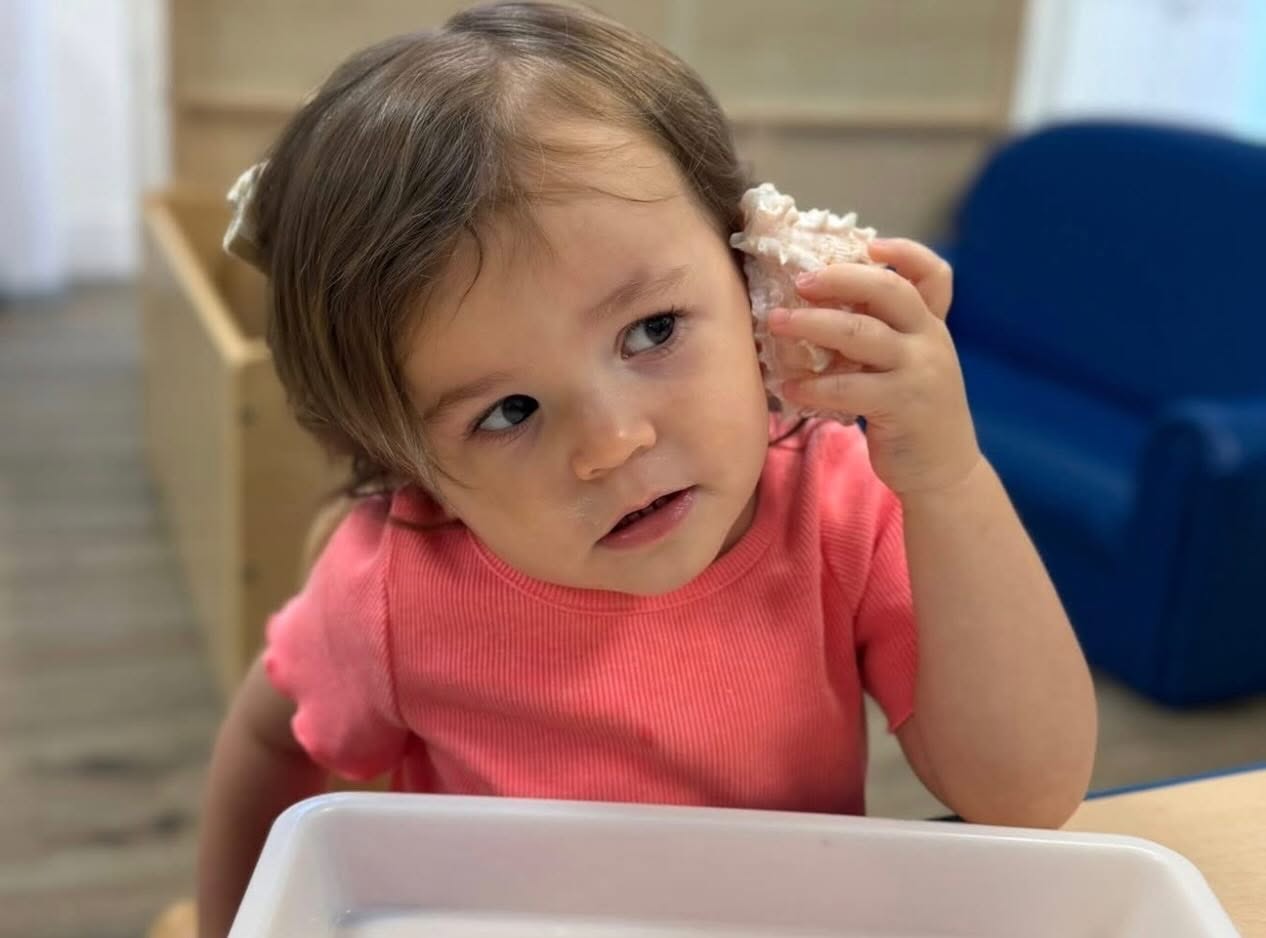
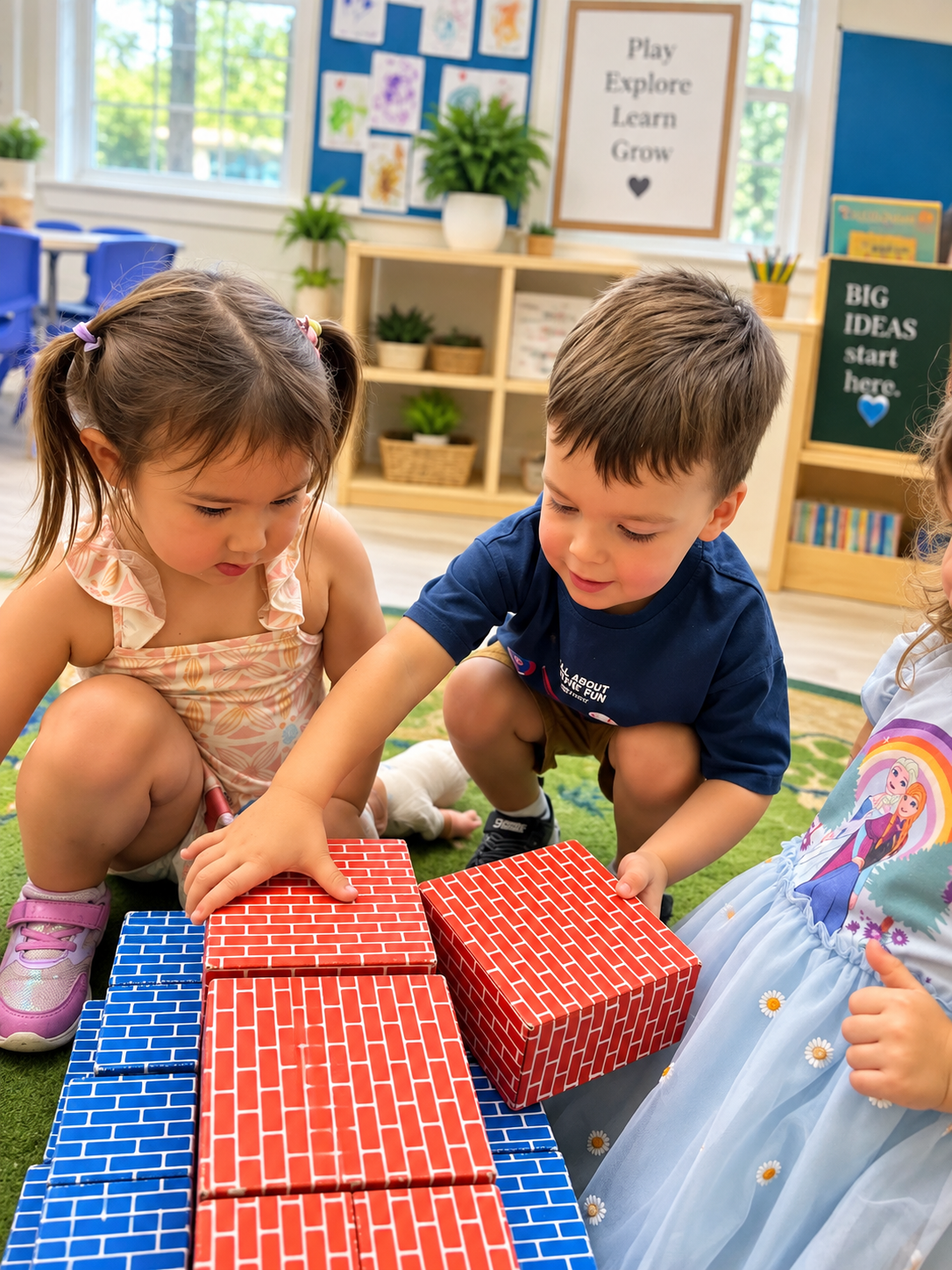
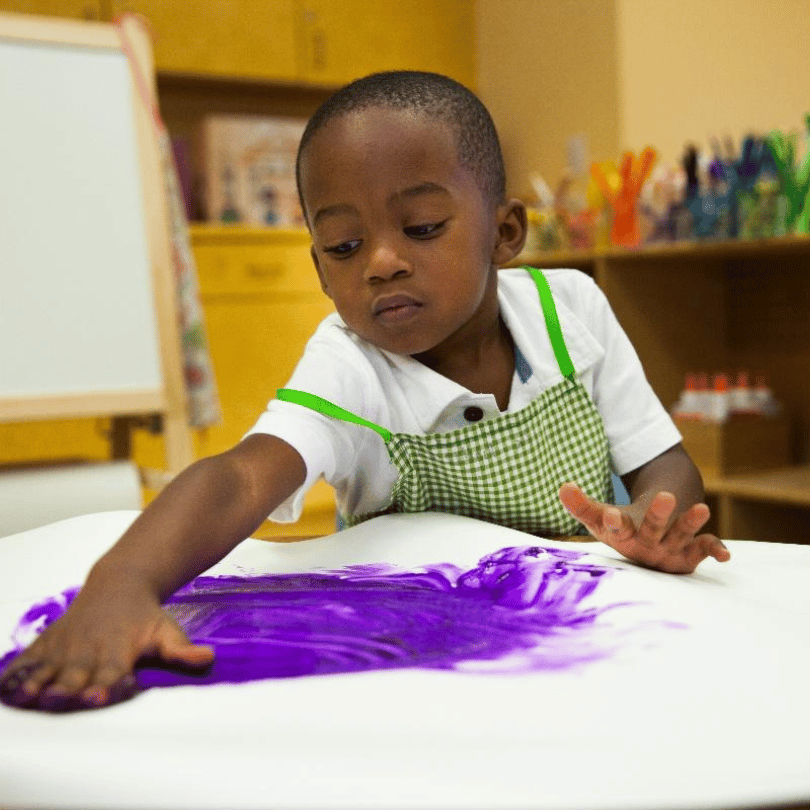
A glimpse of the curious minds, happy moments, and hands-on learning that fill our days in Fishhawk.
Programs by age
One method, every classroom.
From infant care through kindergarten and summer camp, the same cycle of thinking runs through every room — only what the children can carry changes.
Come see the thinking happen.
The best way to understand how we learn is to watch a classroom in action. Schedule a tour of Ebenezer Academy of Fishhawk.